Materials
Beginner's Guide to Plush Fabrics (Your Cheat Sheet)
Fabrics have a “grain” and “stretch”. Understanding these saves you from sewing disasters.
By Stretch (Most important for beginners)
No Stretch (Woven)
⭐ EasyCotton, linen, felt
Why this matters: No-stretch fabrics hold their shape as you sew them. Corners stay where you put them. Best for practice.
1-Way Stretch
⭐⭐ MediumFleece, velour — Stretches left-to-right but not up-down.
Why this matters: You must cut all pieces with stretch going the same direction. If you don't, one arm will stretch sideways and the other arm won't.
4-Way Stretch
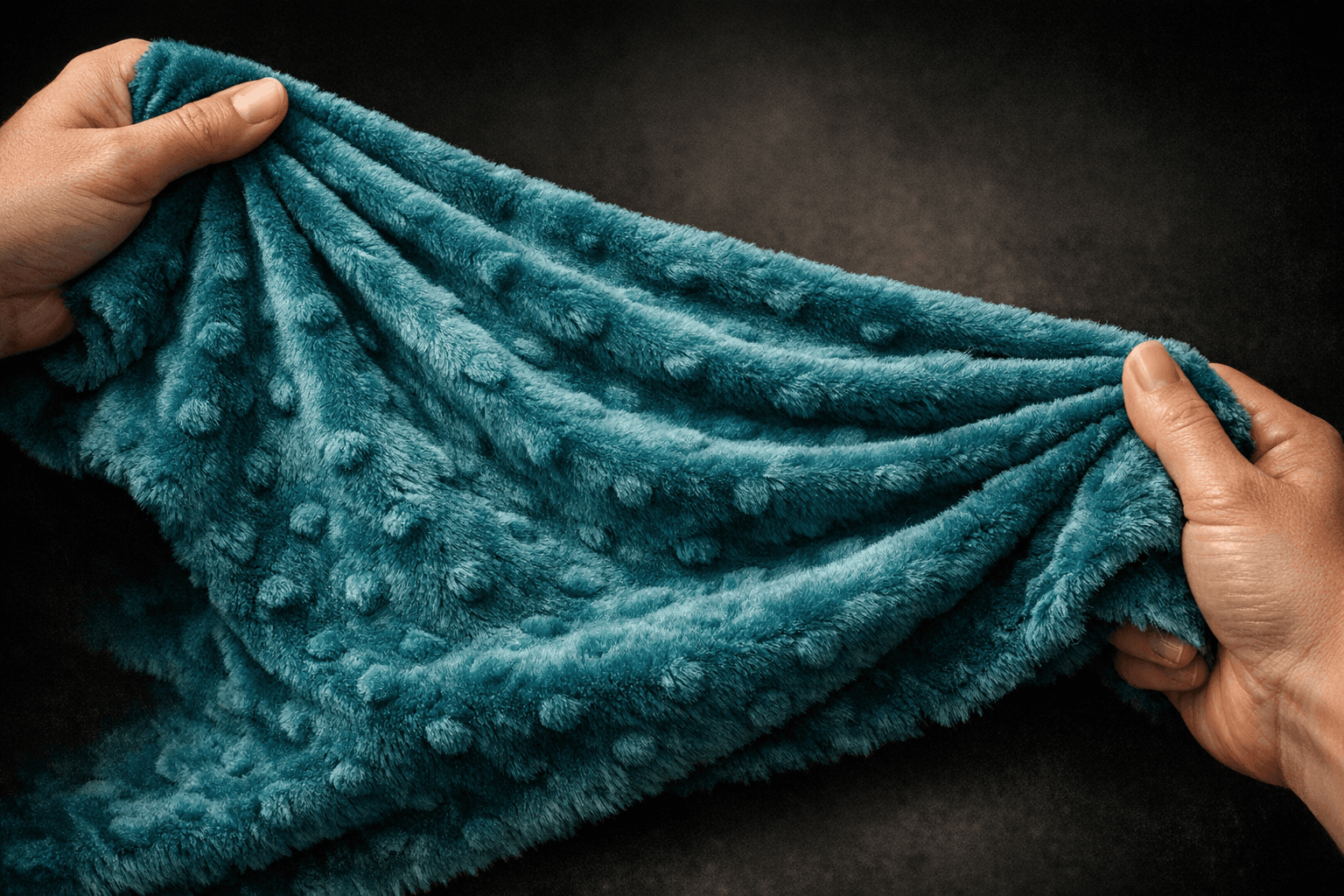
⭐⭐⭐ HardMinky, jersey — Stretches every direction.
Why this matters: These fabrics squirm under your sewing machine. They can become wavy or twisted if you don't use a walking foot. Hard for beginners.
By Fraying (How edges behave)
Fray a lot
Cotton, linen
Why this matters: You must zigzag or serge raw edges, or the seam will disappear inside your toy as threads pull out.
Solution: Zigzag stitch or pinking shears.
Fray a little
Minky, fleece
Why this matters: The synthetic fibers are melted at the factory, so they don't unravel easily. You can leave raw edges inside without worry.
No fray at all
Felt, fleece, synthetic suede
Why this matters: Perfect for no-sew projects or hand sewing. Cut edges act like their own hem.
Buying guide for your first project
Budget
Anti-pill fleece ($8/yard)
Forgiving, doesn't fray, cheap enough for mistakes.
Cute & Easy
Cotton with small print ($10/yard)
Easy to mark, easy to sew, but remember to zigzag edges.
Luxury
Minky ($20/yard — buy extra for mistakes)
Extremely soft but challenging. The extra yard is for practice cuts.
Quick test for fabric quality
Hold the fabric up to light. Can you see through it? If yes, it's too thin for soft toys. Look for fabric that blocks light completely.