Best Fabric for Soft Toys (5 Top Choices)
Not every fabric is cuddly. Here is the beginner's ranking from easiest to hardest.
Minky, sherpa, and velvet have a nap. This means the fabric feels smooth when you stroke it one way and rough the other. Always cut all pattern pieces with the nap running in the same direction (usually top-to-bottom of your toy). If you don't, different body parts will look like different colors and textures under light.
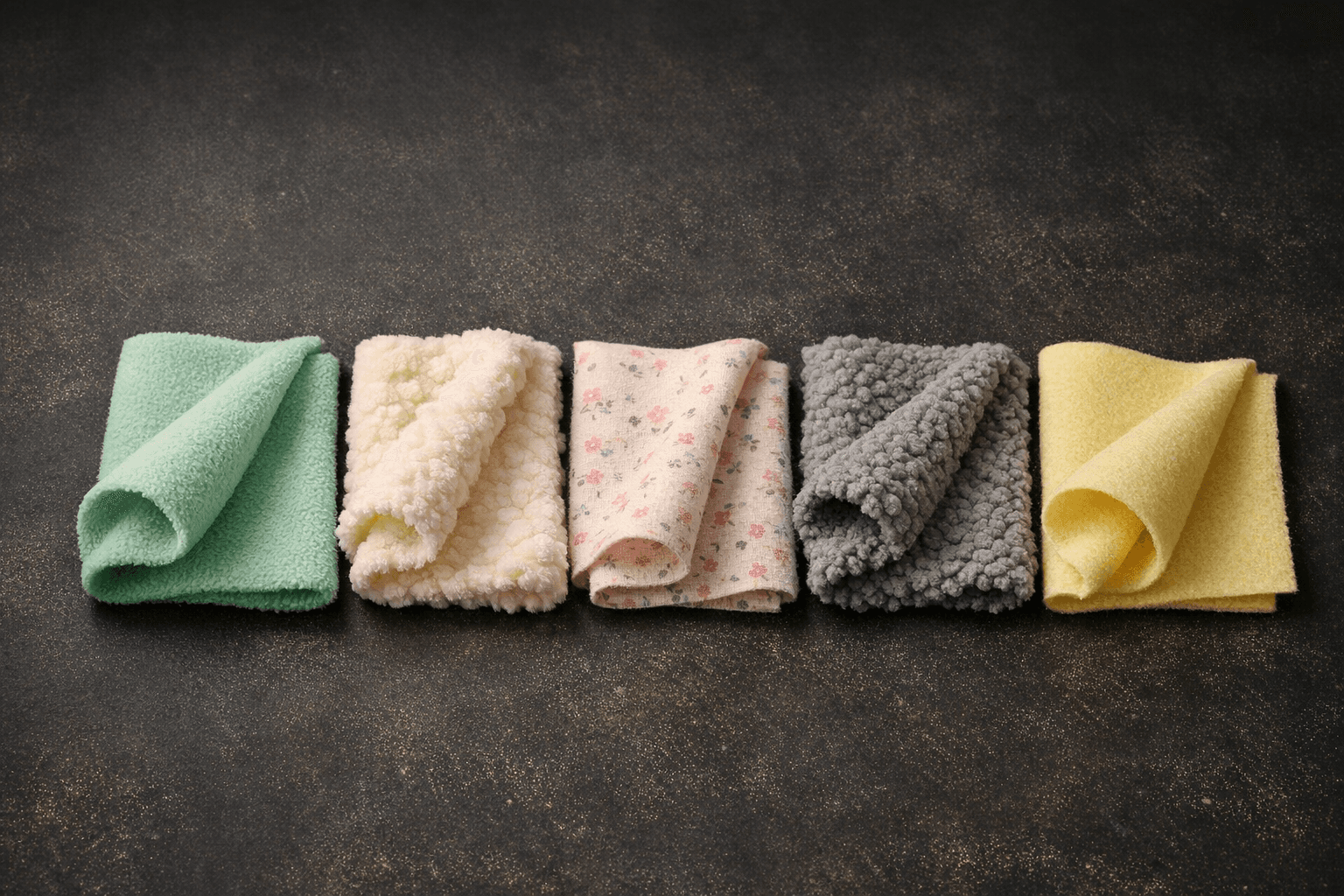
Fabric comparison
| # | Fabric | Best For | Why Beginners Love It | Nap? | Difficulty |
|---|---|---|---|---|---|
| 1 | Cotton Blends | Small, decorative toys | Doesn't stretch, easy to cut, cheap | No nap (easy) | ⭐ Easy |
| 2 | Minky | Super soft, modern plushies | Very soft, hides seams well | YES – pay attention! | ⭐⭐⭐ Medium |
| 3 | Fleece | Baby toys, winter animals | No fraying edges, very forgiving | Minimal (safe to ignore) | ⭐ Easy |
| 4 | Sherpa | Sheep or fluffy bellies | Soft like wool, but messy to cut | YES – critical! | ⭐⭐ Medium |
| 5 | Felt | Small details (eyes, noses) | Stiff, doesn't stretch | No nap | ⭐ Easy |
How to check nap direction
Run your hand across the fabric. The smooth direction = with the nap. The rough direction = against the nap.
Draw arrows on the paper backing of your fabric to remind yourself.
If one arm piece has nap pointing up and the other pointing down, one arm will look darker/shiny and the other lighter/matte — the toy will look mismatched in daylight.
Start with Anti-Pill Fleece. It has almost no nap (so no direction worries), doesn't fray, and is very cheap.