Safety Guide
Safest Stuffing for Baby Toys (0–3 Years)
If the toy is for a child under 3, these rules are mandatory, not suggestions.
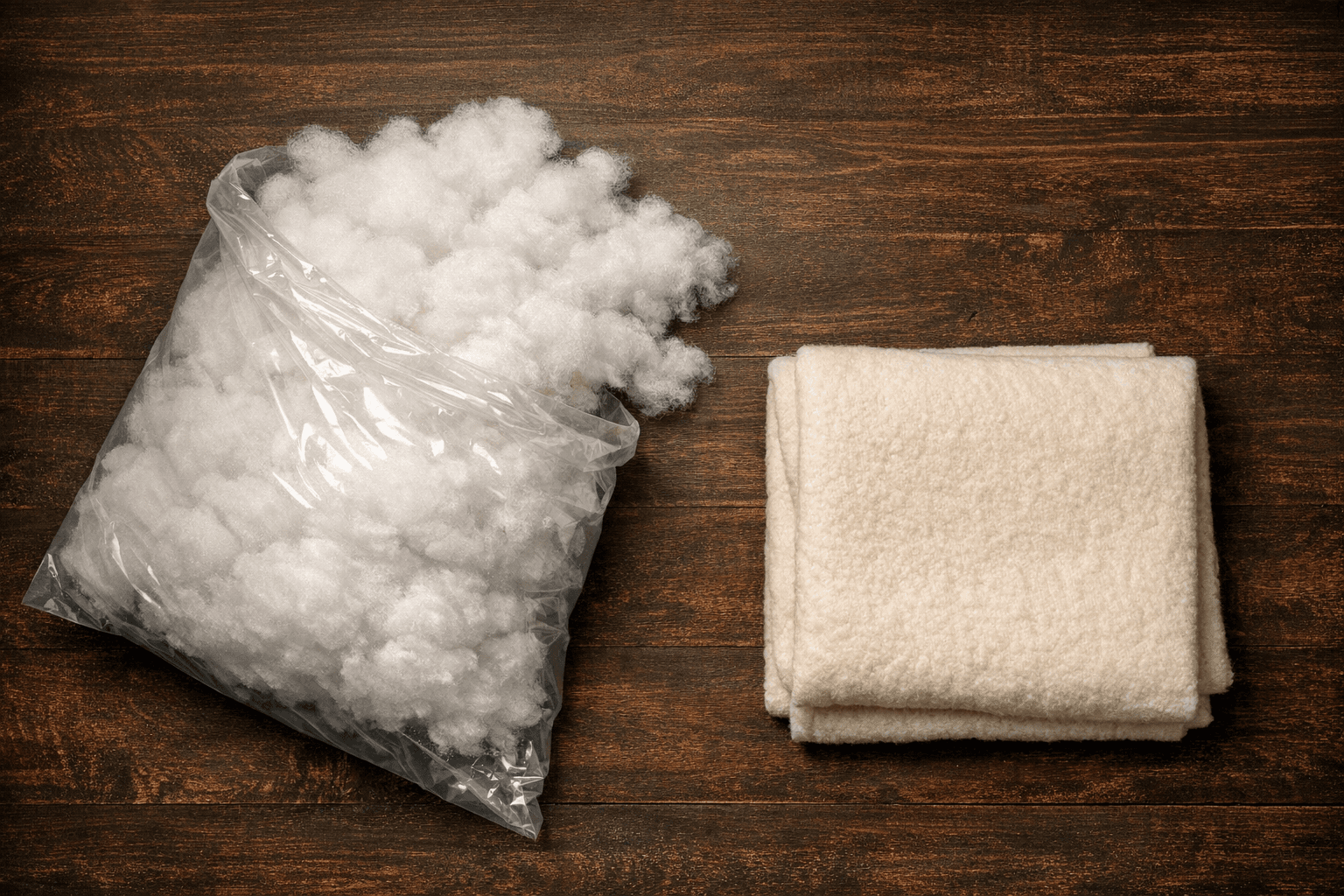
✅ Safe choices
Polyester Fiberfill (Premium)
Look for "non-toxic", "hypoallergenic", and "washable" on the bag.
Why safe: Synthetic fibers don't trap moisture or grow mold. Premium brands test for harmful chemicals.
Organic Cotton Batting
Expensive but the safest option.
Why safe: No chemical flame retardants or pesticides. Cotton is breathable and washable.
Wool (Clean, carded)
Natural, but check for allergies first.
Why safe: Wool resists dust mites naturally. Must be washed to remove lanolin (which some babies react to).
🚫 Never use for babies
Bean bag pellets (polystyrene beads)
Why dangerous: If the seam opens, beads are exactly the size of a baby's airway. One bead = choking hazard.
Recycled fabric scraps
Why dangerous: They lump up into hard balls and can hide mold or staples from the original garment.
Old pillow stuffing
Why dangerous: Pillows collect dust mites, skin oils, and bacteria over years. Not safe for mouthing.
Sand or rice
Why dangerous: Moisture from drool turns sand/rice into a bacterial breeding ground within hours. Also heavy enough to injure if thrown.
The 3 Safety Rules for Baby Stuffing
01
Use an Inner Lining
Put the stuffing inside a tight muslin bag before putting it into the toy.
Why: This creates a double barrier. If the outer seam fails, the inner bag still contains the stuffing.
02
The Pinch Test
After stuffing, pinch the toy firmly.
Why: Hard lumps mean uneven filling. Lumps create pressure points that can pop seams over time.
03
Overstuff slightly
A firm toy is safer than a floppy one.
Why: Firm toys don't allow fingers to dig into seams and pull them apart. Floppy toys invite picking.